
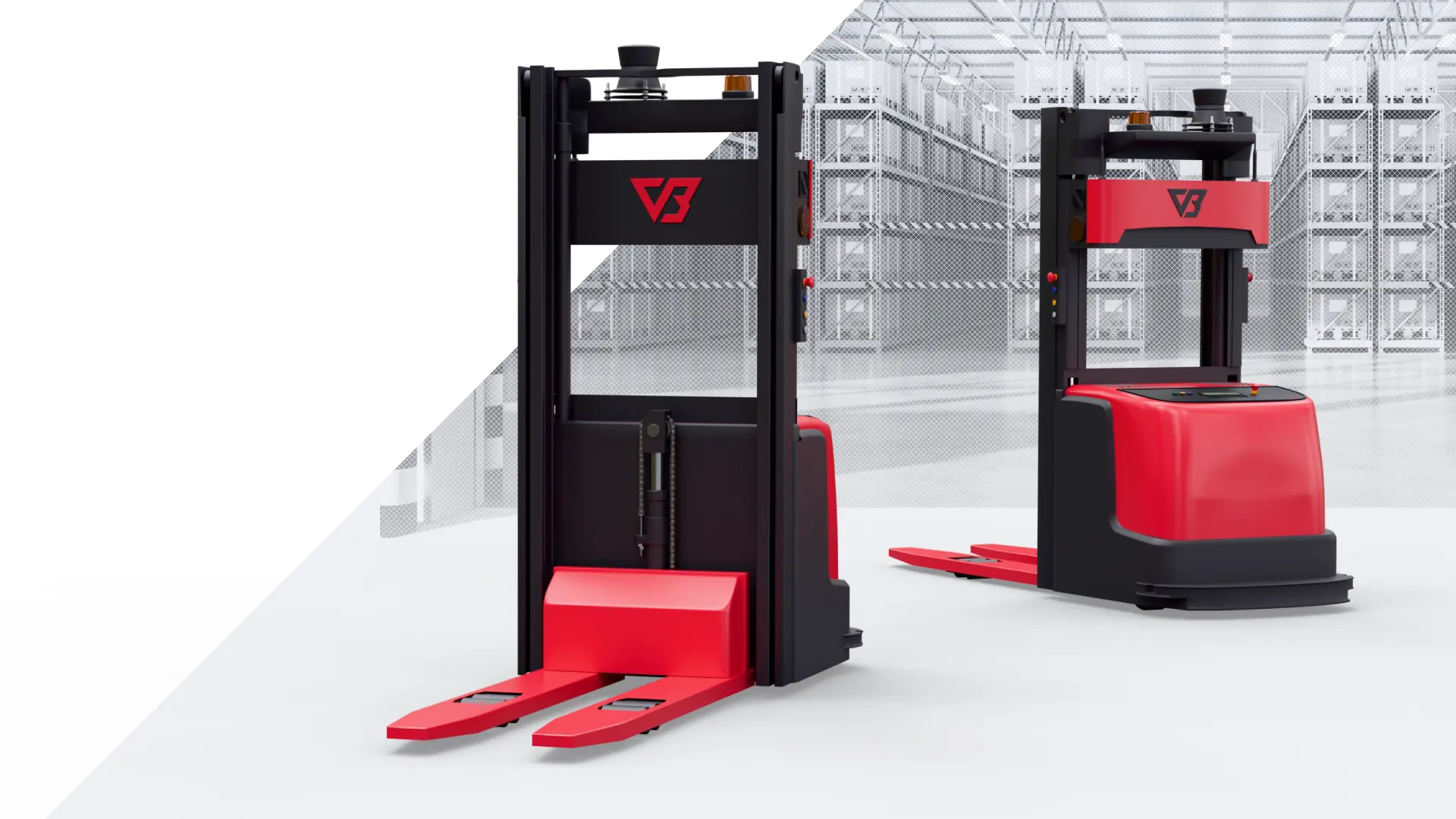
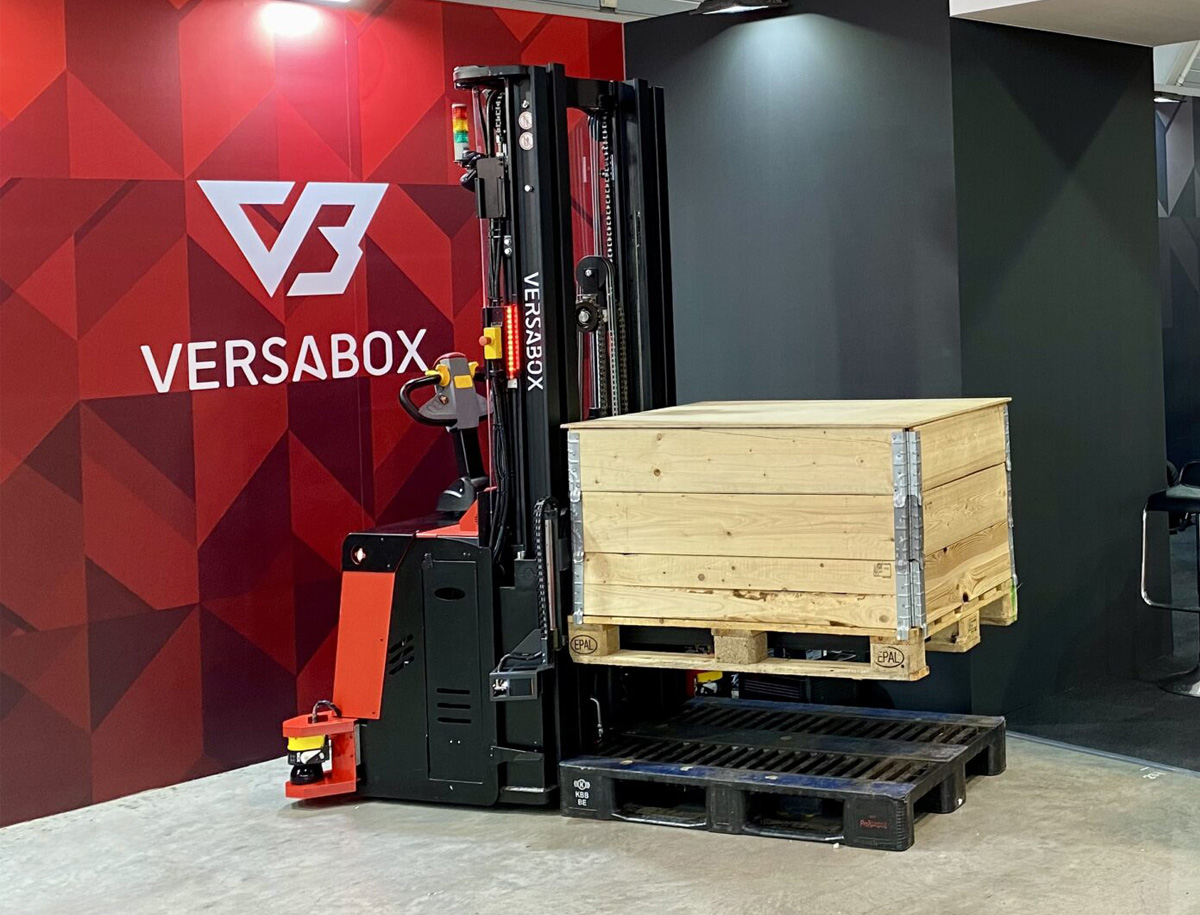
VersaBox AGVs
AGVs are self-driving transport vehicles that automate load handling, eliminating the need for operator involvement. They move according to predefined, programmed parameters, ensuring consistent and controlled material flow within industrial environments.
AGVs are capable of operating 24 hours a day, 7 days a week, enabling continuous and highly efficient logistics processes.
WDX GROUP
Autonomous AGV Transport Systems
AGVs (Automated Guided Vehicles) are autonomous transport vehicles that support internal logistics management within industrial enterprises.
We provide AGV systems designed to handle various types of loads wherever precision and reliability are critical. These solutions enable companies to automate unit-load transport, resulting in higher efficiency and improved safety of logistics operations.
AGVs are widely recognized as a cornerstone of Industry 4.0-driven process optimization, especially in response to the growing demand for automation and streamlined logistics workflows.

Please contact us, we will be happy to answer your questions and prepare an interesting offer.






Key advantages of AGVs
One of the main advantages of AGVs is their ability to significantly improve operational efficiency. By automating internal transport, companies can reduce the time required to move loads, which translates into faster order fulfillment and higher warehouse throughput. AGVs can operate continuously without interruption, eliminating downtime associated with human work shifts and rest periods.
- AGVs are equipped with advanced sensors and navigation systems that minimize the risk of collisions and accidents, which is particularly important in high-traffic industrial environments. Automation also reduces the likelihood of human error, further enhancing overall safety levels in logistics operations.
- Although the initial investment cost may be relatively high, the long-term savings resulting from reduced labor costs and increased operational efficiency are substantial. AGV systems also enable better utilization of resources, leading to lower overall operating costs.
Applications of AGVs across industries
AGVs, or Automated Guided Vehicles, are widely used across multiple sectors—from logistics and manufacturing to healthcare. Their versatility and ability to automate material transport processes make them a valuable asset for modern enterprises. Let’s take a closer look at how these innovative machines are applied in different areas of the economy.
AGVs in warehouse logistics
In warehouse logistics, AGVs play a key role in automating processes such as:
- unloading goods,
- supporting storage operations,
- transporting loads within the warehouse.
Thanks to these capabilities, warehouses can operate significantly more efficiently by eliminating the need for manual material handling. AGVs increase productivity and reduce the risk of errors, which is particularly important in fast-changing warehouse environments.
AGVs in the automotive industry
In the automotive industry, AGVs are indispensable for transporting components such as:
- engine parts,
- automotive electronics,
- other assembly components.
Transport automation enables precise and fast delivery of parts to production lines, which is essential for maintaining continuous and uninterrupted manufacturing processes.
AGVs in the food industry
In the food industry, AGVs are used for transporting materials such as:
- loading food products into sterilizers,
- moving raw materials and semi-finished goods,
- transporting finished products to warehouses.
Automation of these processes not only improves efficiency but also enhances safety and hygiene levels, which are critical in food processing environments.